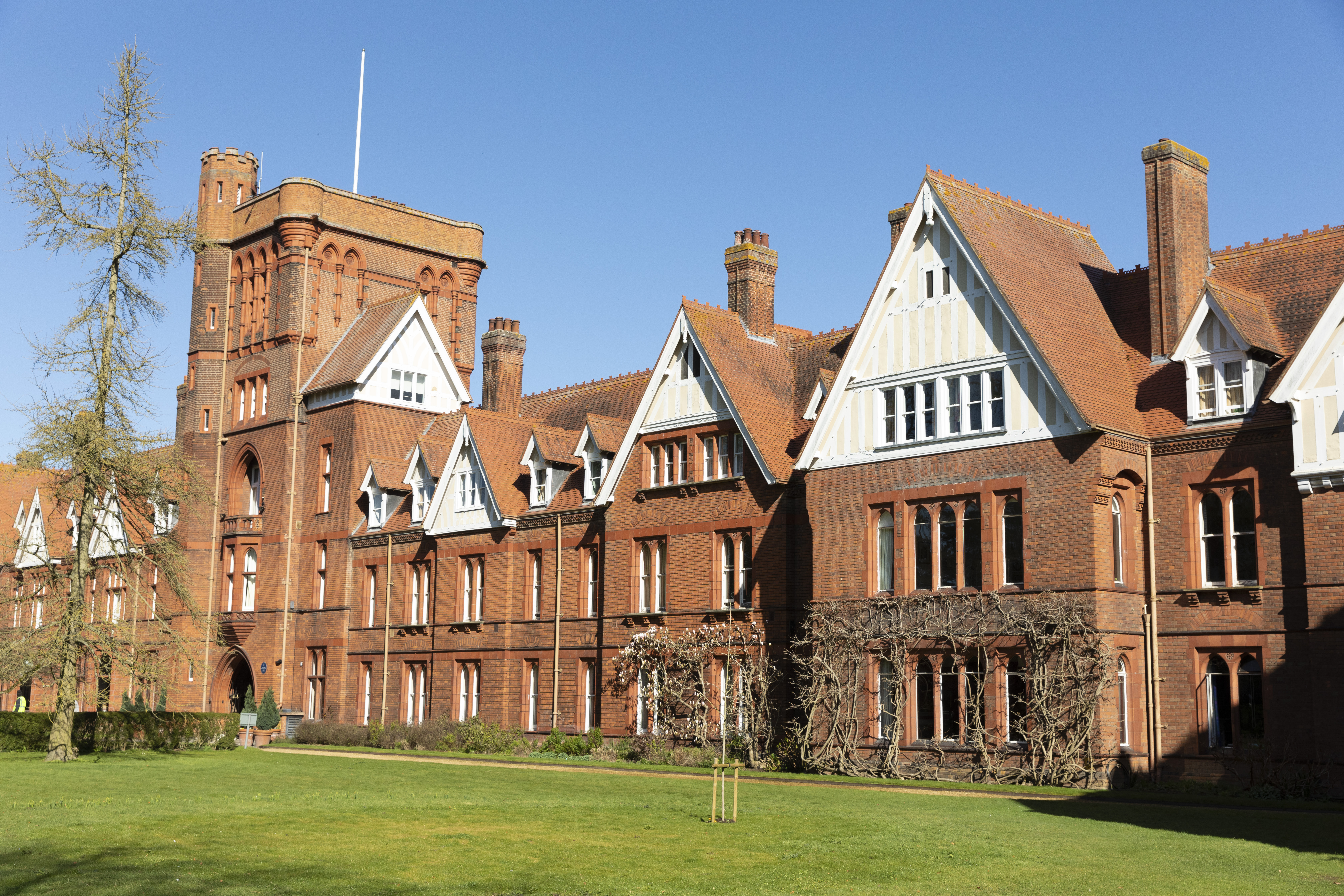
Photograph © Girton College, University of Cambridge
Information on this page
1. The University of Cambridge
2. A Brief History of Girton College
3. Girton College Today
1. The University of Cambridge
An 815 year history…
Origins and brief history
The origins of the University go as far back as 1209 to the earliest records we possess. Scholars taking refuge from hostile townsmen in Oxford migrated to Cambridge, a thriving commercial community, and settled.
In the begining, they lived in lodgings in the town, but eventually hired hostels with a Master to be in charge of students. By 1226 the number of scholars was enough to be considered an organisation, represented by a Chancellor, and arranged regular courses of study.
The first college of the University was Peterhouse, which was founded in 1284 by the Bishop of Ely. In the modern era, there are 31 individual colleges, each with unique foundations, characteristics and architecture. Colleges can be broken into two broad categories, ‘new’ and ‘old’. Downing College, founded in 1800, was the first after a period of 204 years without any new colleges being founded. Thus, any colleges founded before Downing are considered ‘old’ and any founded after are considered to be ‘new’.
The collegiate system
Cambridge and Oxford are well known for the collegiate system of their universities. However, they are not the only two collegiate universities in the United Kingdom, with York, Lancaster, and Durham being collegiate universities too. The University of London also has a similar yet distinct system akin to the college system, but is perhaps more aptly describe as a ‘federal’ system of independent universities associated with the University of London.
In the modern era, the Cambridge collegiate system is made up of 31 constituent colleges. Every student is a member of both a college and the University. The University organises central teaching such as lectures, and colleges organise supervisions (known as ‘supos’). Supos are small group teaching sessions, where students (usually in groups of 4 at most) are able to explore a topic with a supervisor who is usually a Fellow of their own college, or another college. The colleges usually have enough Fellows (academics) to admit students of most subjects offered by the university, with few exceptions.
So, membership of a college is essentially membership of a club of fellow students, with benefits such as cheaper dining and access to your college library and other resources, as a result. Colleges may be known for certain subjects, such as Maths at Trinity, or famous lawyers from Girton. Some colleges are for mature students (age 21+) only, or graduates only. Two colleges are exclusively for women (Murray Edwards & Newnham). Most admit undergraduates under 21 and graduates of all ages.
Notable figures
Many famous (some infamous) figures in history were educated at Cambridge, you may know a few of them. Some of the famous scientists include; Stephen Hawking, Isaac Newton and Robert Oppenheimer. The famous biologist Charles Darwin (after which Darwin College is named) and the Danish physicist Neils Bohr also studied here.
Cambridge also has a thriving acting scene, with alumni such as Emma Thompson, Tom Hiddleston and Rachel Weisz. No one can say we aren’t funny either as comedians Jimmy Carr, Sue Perkins, Sandi Toksvig (a Girtonian too!) and national gem Stephen Fry studied here as well! The Footlights, a sketch comedy troupe founded in 1889, are well known in and out of Cambridge, many successful actors from Cambridge have been a part of this troupe, which is still active today!
Cambridge has been home to a vast array of talented people who have gone on to do incredible work in a range of field. The list of notable scientists and actors is just an example of the breadth of talent that have come from this University.
Law at Cambridge
The law faculty at Cambridge is a well known and well connected faculty both within the UK and abroad. The faculty has a number of exchange programmes for staff, students, and academics to aid in their professional, educational, and academic development. PhD students, for example, have the opportunity to spend some time at Harvard Law School, and for their SJD counterparts to come here. There are further opportunities for students to explore European universities on the League of European Research Universities Law PhD exchange scheme. Undergraduates also had had, in the past, the opportunity to attend any number of universities across Europe and beyond, whether in English or in the host nations native language, to get experience of different jurisdictions.
The law faculty library, the Squire Law Library, used to be housed on Downing Site, before moving to Old Schools (now Gonville and Caius College library) before it moved to its current place in the law faculty on Sidgewick site. The library is a dependent library of the Cambridge University Library and thus has the status of a legal depository. It is one of the largest academic legal collections in the United Kingdom.
There are also a number of research centres which are faculty organisations. Areas of law include corporate and commercial law, criminal justice, English legal history, European legal studies, intellectual property and information law, medicine and life science, legal and political philosophy, private law and many others!
Of course, at the heart of the faculty are the people. There is a plethora of well respected legal academics from a range of disciplines who work in and teach at the faculty. Many of which take up other positions in the university and their college. Professor Graham Virgo is the new Master of Downing College, and Professor Janet O’Sullivan is the Vice-Master of Selwyn College. Not to mention our very of Professor Toni Williams as the Senior Tutor of Girton College. Some senior college members may just take up positions in their colleges which are not associated with teaching roles, the colleges are first and foremost a community of academics often headed by individuals who have been academics themselves. Therefore, some academics may occupy senior positions without teaching at the University or supervising in their college. Some may take up a role as a pastoral Tutor.
2. A Brief History of Girton College
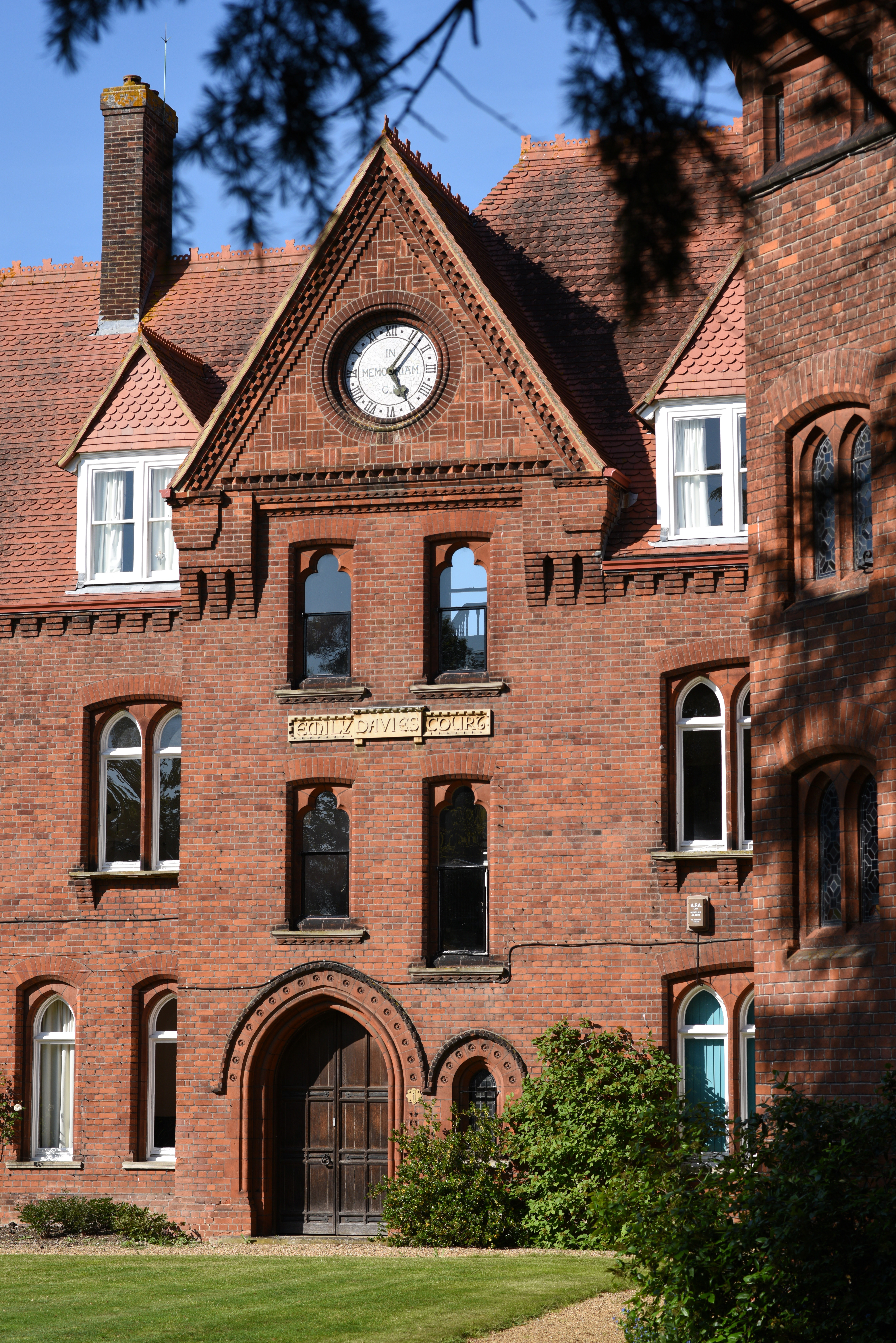
Girton College is proud of its pioneering past as the first residential institution for the higher education of women. It began as a humble institution at Benslow House, Hitchin, in 1869, but grew immensely in 1873 when we settled in Cambridge with our first cohort at the new site. The college has seen strong development in women’s suffrage, had many notable ‘firsts’ and its past is filled with inspiring stories of strength and community.
If you want to learn a bit more about our pioneering history, feel free to check out the link below. It will take you to the college website where well researched pieces have been written on various aspects of the colleges past.
3. Girton College Today
At the cutting edge
Girton is set on 50 acres of land, with lush gardens, an apple orchard, large outdoor pitches, a sensory garden, large pond, wildlife habitats, an indoor heated swimming pool, extensive library, and beautiful rooms! The College has 191 Fellows (including honorary and life Fellows), over 500 undergraduates and over 400 postgraduates. It is a thriving academic community covering a multitude of disciplines.
191 Fellows
The Fellows make up the self-governing body of the college. They contribute not only to its governance and maintenance but also to the academic development of the College and her students.
The college has 10 Fellows currently who have an academic background in law (not including College Officers such as Professor Williams!). They all bring with them their own interests and professional experience, such as Dr Stephanie Palmer who was counsel in the important constitutional law case studied by law students, R (Evans) v Her Majesty’s Attorney General and The Information Commissioner. Mrs Juliet J d’A Campbell served as Mistress of the college previously and Ms Karen Lee was Vice-Mistress before our current office holder. We also have those currently engaged in teaching in various positions in the college and university, Dr Tom Hawker-Dawson, Dr Stelios Tofaris, Dr Shona Wilson Stark, Mr Mark Smith and our two newest law fellows, Dr Tor Krever and Dr Lena Holzer! Their interests cover sports law, contract, criminology and far beyond! Feel free to check out their individual profiles on the college page to learn more about them and their work.
Over 500 undergraduates & over 400 postgraduates
Girton is home to over 900 students all at various stages of their education. With the resources available Girton provides a top quality education for all its students. By Cambridge college standards, Girton is considered a ‘large’ college, with the smallest college admitting around just 70 undergraduates a year (Peterhouse).
A holistic education
Girton isn’t just about the degree you are working hard towards, there are a plethora of opportunities to engage with various different extracurriculars, from student government (JCR/MCR), to choir, an array of different sports utilising our large pitch and other student societies (poetry, pottery, faith and more). With everything a student can need on site, Girton creates a lively and active community of people with varied interests.
This doesn’t include the various networking opportunities and regular events hosted at the college such a concerts by students, the annual Law and Finance event, Garden Party and Spring Ball. Students get the chance to network and plan events to create a strong CV instilling in them transferrable skills for life. The Girton Skills Programme further fosters these aims throughout the academic year.
 1st European Conference of the International Association of Consumer Law